
If you’re training hard but stuck on a plateau, the problem isn’t your effort—it’s your approach. Stop searching for a single magic bullet like the « perfect » rep range or exercise. Real, guaranteed muscle growth comes from thinking like a coach: systematically managing the interplay between volume, intensity, execution quality, and recovery. This guide gives you the framework to stop guessing and start building a program that creates an undeniable stimulus for growth.
You show up to the gym every week. You lift heavy, you sweat, and you push through the burn. Yet, when you look in the mirror or take out the measuring tape, the frustrating reality hits: nothing is changing. You’re stuck on a plateau, and the generic advice you find everywhere— »just add more weight, » « stick to 8-12 reps, » « eat more protein »—has stopped working. It feels like you’re spinning your wheels, putting in the work without seeing the reward.
The issue isn’t a lack of effort. It’s a lack of a systematic approach. The fitness industry often sells simple answers to complex problems, but for the intermediate lifter who is no longer making beginner gains, these rules of thumb are insufficient. The truth is, there is no single « best » program. The most effective plan is one that is built on a solid understanding of the core principles of muscle growth. It’s about moving beyond dogma and learning to manipulate the key training variables yourself.
But what if the key to unlocking new growth wasn’t in finding a new program, but in understanding the principles that make *any* program work? This is where you transition from merely following instructions to designing with intent. This guide will provide you with a coach’s perspective. We will dismantle the common myths and give you the tools to analyze and adjust the critical levers of hypertrophy: rep ranges, volume, intensity, exercise selection, rest periods, and execution.
By the end, you will not just have a collection of workouts, but a durable framework for building your own training blocks—a system designed to create a constant, undeniable stimulus that forces your muscles to adapt and grow, finally breaking through that stubborn plateau.
Summary: How to Design a Hypertrophy Program That Guarantees Muscle Growth?
- Low Reps vs High Reps: Which Range Actually Stimulates More Muscle Fiber?
- Volume or Intensity: How to Add Stress to Your Muscles Week by Week?
- Machines vs Free Weights: Which Is Better for Isolating Target Muscles?
- Short Rest vs Long Rest: Why Resting 3 Minutes Might Be Better for Growth?
- Time Under Tension: Should You Slow Down Your Reps for More Gains?
- The Anabolic Window: Is Eating Immediately Post-Workout Necessary or a Myth?
- Linear Progression: How to Add Weight Every Week Without Stalling?
- How to Maximize Anabolic Functions Naturally Without Performance Enhancing Drugs?
Low Reps vs High Reps: Which Range Actually Stimulates More Muscle Fiber?
One of the most persistent dogmas in bodybuilding is the sacred « hypertrophy range » of 8-12 repetitions. Lifters religiously stick to it, believing that anything lower is purely for strength and anything higher is just for endurance. This rigid thinking is a primary reason why many people plateau. The reality is that your muscles don’t have a built-in rep counter; they respond to tension and metabolic stress, both of which can be achieved across a wide spectrum of rep ranges.
The key factor for stimulating a muscle fiber is not the specific number of reps, but bringing that fiber to or near mechanical failure. Whether you get there with 5 heavy reps or 25 lighter reps, the effective stimulus for growth is remarkably similar. In fact, modern research demonstrates that muscle growth can be achieved across a very wide spectrum of loading ranges, as long as sets are taken close to failure. This means that sets of 5-8, 8-12, and even 20-30 can all be highly effective for building muscle.
Thinking like a coach means using this knowledge strategically. Instead of being locked into one range, you can periodize your training to reap the benefits of all of them. Heavy, low-rep sets are excellent for neurological adaptations and creating high mechanical tension. Moderate rep ranges offer a great blend of tension and metabolic stress. High-rep sets are fantastic for creating immense metabolic stress and improving your pain tolerance, which has its own benefits.
A truly effective program will incorporate a variety of these ranges. For example, you might start a training block with a heavy compound lift in the 5-8 rep range, followed by assistance work in the 10-15 range, and finish with an isolation exercise for 20+ reps. This ensures you are stimulating the full spectrum of muscle fibers and providing a novel stimulus to prevent adaptation and break through plateaus.
Volume or Intensity: How to Add Stress to Your Muscles Week by Week?
Progressive overload is the undisputed king of muscle growth. To grow, you must consistently ask your body to do more than it has before. But « doing more » is where many lifters get lost. They often default to only one method: adding weight to the bar (intensity). While essential, this is only half of the equation. The other critical lever you must learn to manipulate is training volume—the total amount of work you do, typically calculated as sets x reps x weight.
For an intermediate lifter, manipulating volume is often the key to unlocking new growth. Research clearly shows a dose-response relationship between volume and hypertrophy; to a certain point, more volume equals more muscle. For example, a landmark 2017 meta-analysis by Schoenfeld found that 10+ sets per muscle group per week produced significantly greater muscle growth than fewer sets. This suggests that if you’re stuck doing the same 3 sets of 3 exercises for your chest every week, you may simply not be providing enough of a stimulus anymore.
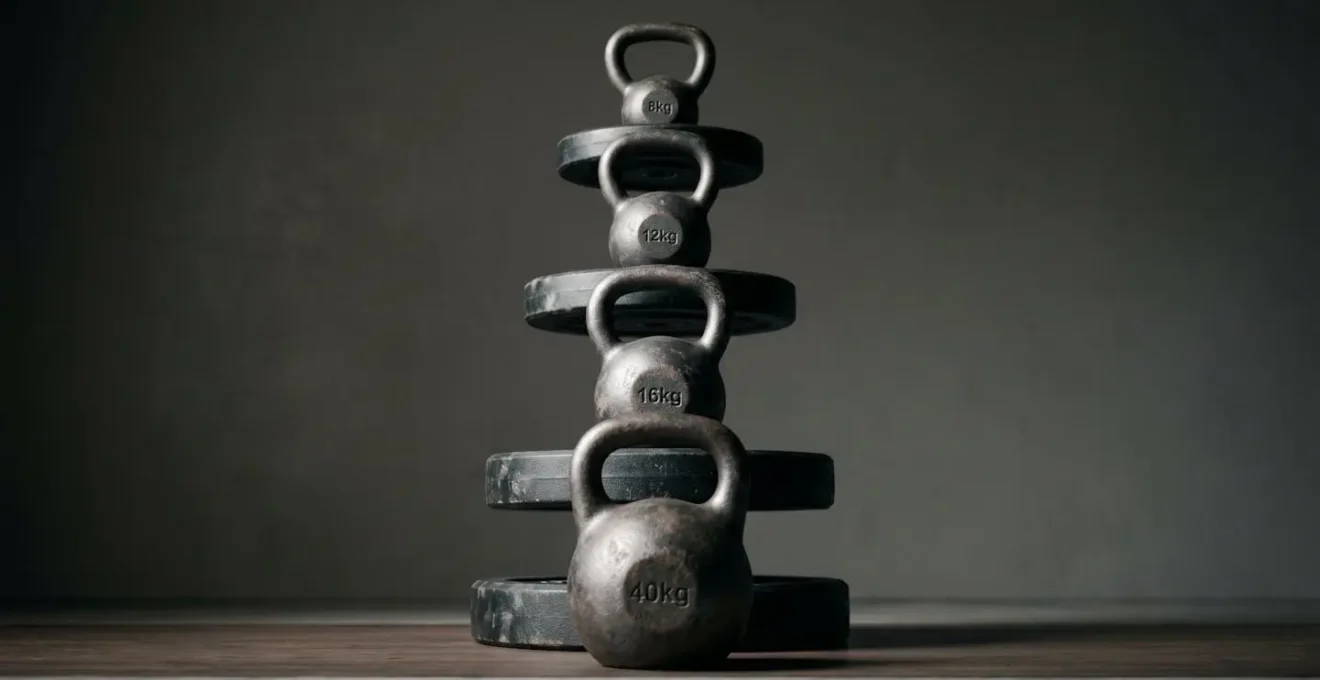
As the image above suggests, the relationship between volume and intensity is a delicate balance that must be managed over time. You cannot simply add more sets and more weight indefinitely without leading to burnout. A smarter approach is to use a periodized model. You might spend a 4-week « accumulation » block focused on increasing your volume—adding a set to your main exercises each week—while keeping the weight moderate. This is followed by a 4-week « intensification » block where you reduce the volume but focus on increasing the weight on the bar.
This cyclical approach allows you to push one variable while allowing the other to recover, managing fatigue and driving long-term progress. Instead of asking « should I add weight or sets? », a coach asks « which variable am I prioritizing in this training block? ». This strategic thinking prevents stagnation and ensures you’re always providing a potent, targeted stimulus for growth.
Machines vs Free Weights: Which Is Better for Isolating Target Muscles?
The « free weights vs. machines » debate is another source of gym dogma. The hardcore purist will tell you that barbells and dumbbells are superior for building « real-world strength » and are all you need. On the other hand, some argue machines offer superior safety and isolation. As a coach, the correct answer is that this is the wrong question. It’s not about which is universally « better, » but which tool is the right choice for a specific job within your program.
The primary goal of a hypertrophy program is to apply targeted mechanical tension to a specific muscle and fatigue it effectively. Both free weights and machines can accomplish this. Free weights demand more stabilization, engaging more secondary muscles, which can be both a benefit (more total muscle worked) and a drawback (stabilizers may fatigue before the target muscle). Machines, by contrast, remove the need for stabilization, allowing you to focus 100% of your effort on isolating and overloading the target muscle. This can be incredibly valuable, especially later in a workout when you are already fatigued.
Recent science supports this pragmatic view. In fact, a 2023 systematic review and meta-analysis revealed that there were no significant differences in muscle hypertrophy between training with free weights and training with machines. The stimulus, when equated, produces similar results. Therefore, the choice should be based on strategic application, not ideology.
A well-designed program leverages the strengths of both. You might start your leg day with a heavy barbell squat (a free weight compound movement) to build a foundation of strength and coordination. Afterwards, you could move to the leg press and leg extension machines to accumulate more targeted volume for the quads without the systemic fatigue and stability demands of more squatting. This combination allows for a more complete and targeted stimulus than relying on a single modality. Your program should be a toolbox, and you should feel empowered to use every tool available.
Short Rest vs Long Rest: Why Resting 3 Minutes Might Be Better for Growth?
In the quest for hypertrophy, many lifters are taught to keep rest periods short—typically 60-90 seconds—to maximize metabolic stress and « keep the pump. » The idea is that this hormonal and metabolic environment is a key driver of growth. While there’s a grain of truth to this, an overemphasis on short rest periods can be counterproductive, especially for an intermediate lifter who is trying to push heavy loads for multiple sets.
The primary driver of growth is mechanical tension, which is best achieved by lifting a challenging weight for a sufficient number of reps over multiple sets. If your rest periods are too short, you won’t be fully recovered for your next set. This means you will either have to reduce the weight or perform fewer reps. Over the course of a workout, this accumulated fatigue leads to a significant drop-off in performance, meaning you’re providing a weaker growth stimulus on your most important sets.
This is not just theory; it’s backed by powerful evidence. In one famous study, lifters were split into two groups: one rested for 1 minute between sets, and the other for 3 minutes. As you might expect, the longer rest periods led to greater strength gains. But, more surprisingly, they also led to significantly more muscle growth.
Case Study: Schoenfeld’s 1-Minute vs 3-Minute Rest Study
In a pivotal 8-week study, 21 resistance-trained men were assigned to either 1-minute or 3-minute rest intervals between sets, with all other training variables kept the same. They performed total-body workouts three times a week. The results challenged traditional beliefs: the 3-minute rest group experienced significantly greater increases in muscle thickness in the biceps, triceps, and quadriceps, as well as superior strength gains on the bench press and squat compared to the 1-minute group.
This doesn’t mean you should always rest for 3+ minutes. For smaller, single-joint isolation exercises like bicep curls or lateral raises, a shorter rest of 60-90 seconds is often sufficient and can be beneficial for creating metabolic stress. However, for your big, heavy, multi-joint compound lifts like squats, deadlifts, and presses, you should not be afraid to take longer rest periods of 2-4 minutes. This ensures you can maintain high performance across all your work sets, maximizing the primary driver of growth: progressive tension overload.
Time Under Tension: Should You Slow Down Your Reps for More Gains?
Once you’re managing volume and intensity, the next layer of sophistication is to focus on execution quality. Time Under Tension (TUT) is a concept that refers to how long a muscle is held under strain during a set. The common advice is to simply slow down your reps to increase TUT, but this is an oversimplification. What truly matters is not just the duration, but the *quality* of that tension, particularly during the eccentric (lowering) phase of the lift.
The eccentric portion of a repetition is where a significant amount of muscle damage—a key component of the hypertrophy signal—occurs. Controlling the negative, rather than just letting the weight drop, can dramatically increase the growth stimulus of a set. This is not about lifting painfully slowly on every rep, which can limit the amount of weight you can use. Instead, it’s about deliberate and controlled movement, ensuring the target muscle is doing the work through the full range of motion.

As the image illustrates, creating high-quality tension is about feeling the muscle fibers engage and stretch. A practical way to implement this is through « tempo » prescriptions. Tempo is noted as a series of four numbers, representing the time in seconds for the eccentric, pause at the bottom, concentric (lifting), and pause at the top. For example, a tempo of 3-0-1-0 on a bench press means a 3-second controlled descent, no pause at the chest, an explosive 1-second press up, and no pause at the top.
Using tempo is a powerful tool. For compound movements, focusing on a controlled eccentric (2-3 seconds) followed by an explosive concentric maximizes both mechanical tension and fast-twitch fiber recruitment. For isolation movements, you can use slower eccentrics and even add pauses at the point of peak contraction or stretch to enhance the mind-muscle connection and create a different kind of metabolic stress. By manipulating tempo, you add another layer of progressive overload to your program that isn’t dependent on just adding weight or sets.
The Anabolic Window: Is Eating Immediately Post-Workout Necessary or a Myth?
For decades, lifters have lived in fear of « missing the anabolic window. » This is the belief that you must consume a protein shake within 30-60 minutes of finishing your workout, or your entire session will be wasted. Gyms are filled with people frantically chugging shakes before they even hit the showers. While nutrient timing isn’t completely irrelevant, this concept of a narrow, critical window has been largely debunked as a myth.
The process that drives muscle growth, known as Muscle Protein Synthesis (MPS), is not a brief event that turns on and off like a light switch. After a strenuous resistance training session, your body’s sensitivity to protein is elevated for a much longer period than just one hour. In fact, research demonstrates that protein synthesis elevation continues for 24-48 hours after a training session. This means your body is in a prime « anabolic » state for at least a full day, and sometimes two.
What does this mean for your program? It means you can stop stressing about slamming a shake the second you finish your last rep. The far more important factors are your total daily protein intake and the distribution of that protein throughout the day. The coaching consensus is to focus on consuming an adequate amount of protein (typically 1.6-2.2g per kg of bodyweight) spread across 3-5 meals. This ensures your body has a steady supply of amino acids to take advantage of that elevated 24-48 hour window of protein synthesis.
So, is there any reason to have a post-workout meal? Yes, but for different reasons. A meal containing protein and carbohydrates after training helps to replenish glycogen stores and kick-start the recovery process. It’s a good and convenient time to get in one of your daily protein feedings. However, it is not a magical, make-or-break moment. If you had a protein-rich meal a few hours before your workout, the amino acids are still circulating in your bloodstream. The urgency is simply not there. Focus on the big picture—total daily intake—not the ticking clock.
Linear Progression: How to Add Weight Every Week Without Stalling?
Linear progression is the simplest and most effective method of progressive overload for a novice lifter. The principle is straightforward: you add a small amount of weight to the bar every workout or every week. For a beginner, whose body is hyper-responsive to any new stimulus, this method works like magic. However, as an intermediate lifter, you’ve likely discovered that this simple approach eventually leads to a hard stall. You can’t just add 5 pounds to your squat every single week forever.
The key to making linear progression work beyond the beginner phase is to stop thinking of it as a single, endless line. Instead, view it as a series of shorter, repeating cycles. This is the foundation of periodization. You can no longer progress every single workout, but you can still aim to be stronger at the end of a 4-week block than you were at the start. This requires a more nuanced approach than simply adding weight.

This journey from simple to complex progression is a natural part of a lifter’s career. To break through a plateau, you need to introduce more variables. One effective method is « double progression. » Here’s how it works: you pick a target rep range (e.g., 8-12 reps). You start with a weight you can lift for 3 sets of 8 reps. You do not add weight to the bar until you can successfully complete all 3 sets for 12 reps with good form. Once you achieve that, you then add a small amount of weight and start the process over, likely back at around 8 reps. This model builds in both volume progression (adding reps) and intensity progression (adding weight) in a structured way.
Another key strategy is the planned deload week. After 3-6 weeks of pushing hard and accumulating fatigue, you take a week where you significantly reduce your volume and/or intensity. This allows your body to dissipate fatigue, recover, and come back stronger for the next training block. Trying to push linearly forever without deloading is a surefire recipe for injury and burnout. True linear progression for an intermediate is not a straight line up; it’s a series of upward waves, with each peak higher than the last.
Key Takeaways
- No ‘magic’ rep range exists; muscle growth happens across a wide spectrum when sets are taken close to failure, making variety key.
- Progressive overload is driven by systematically increasing total training volume and/or intensity over time, not just by adding weight to the bar.
- Adherence and execution quality are the most powerful anabolic signals; a program you can execute perfectly and consistently will always beat a « perfect » program you hate.
How to Maximize Anabolic Functions Naturally Without Performance Enhancing Drugs?
You can have the most scientifically « optimal » training program in the world, but if your lifestyle is catabolic (breakdown-oriented), you will not grow. For a natural lifter, creating an overall anabolic environment is just as important as the training itself. This means optimizing the foundational pillars that support recovery and hormonal health: sleep, nutrition, and stress management. These are not optional extras; they are non-negotiable components of a program designed for guaranteed growth.
Sleep is arguably the most powerful natural anabolic agent available. It’s during deep sleep that your body releases crucial hormones like growth hormone and testosterone, while simultaneously clearing metabolic waste products from your system. Consistently getting 7-9 hours of high-quality sleep per night is not a sign of laziness; it is a deliberate training strategy. Neglecting sleep is like trying to build a house during an earthquake—the foundation is simply too unstable.
Similarly, chronic life stress is profoundly catabolic. High levels of the stress hormone cortisol can directly impair muscle protein synthesis, increase muscle breakdown, and interfere with sleep. You cannot separate your « gym life » from your « real life. » Implementing stress management techniques—whether it’s meditation, walks in nature, or simply scheduling time for hobbies—is a critical part of a holistic hypertrophy program. It directly impacts your ability to recover from and adapt to your training.
Your Action Plan: Audit Your Anabolic Foundation
- Circadian Alignment: Track your morning light exposure. Log at least 10 minutes of direct sunlight within one hour of waking for a full week.
- Nutrient Absorption: Inventory your daily fiber intake. List all sources and aim for a consistent 25-35g from diverse whole foods, not just supplements.
- Micronutrient Status: Check your diet or supplements against key cofactors. Verify adequate daily intake of Zinc, Magnesium, and Vitamin D based on recommended values.
- Stress Management: Schedule and execute a non-negotiable 15-minute stress-reduction activity daily. Note its impact on your perceived recovery and sleep quality.
- Inflammation Control: Identify and list pro-inflammatory habits (poor sleep, processed foods). Create a plan to systematically replace one habit each week with an anti-inflammatory alternative.
Ultimately, the most effective program is the one you can adhere to with consistency and enthusiasm. This is a point powerfully articulated by one of the leading minds in hypertrophy training. As Dr. Mike Israetel of Renaissance Periodization states:
A program that is ‘optimal’ on paper but causes dread and anxiety is catabolic in practice. Adherence and enjoyment are powerful anabolic signals. The ‘guaranteed’ program is one you can execute with enthusiasm and confidence.
– Dr. Mike Israetel, Renaissance Periodization training philosophy
This profound insight shifts the focus from chasing a theoretical « perfect » to building a sustainable and enjoyable practice. Your confidence in your plan and your ability to execute it consistently are, in themselves, powerful anabolic signals.
Stop guessing and start designing. Use this framework to audit your current program, identify your weakest link, and build your next training block with intention. Your breakthrough is waiting.