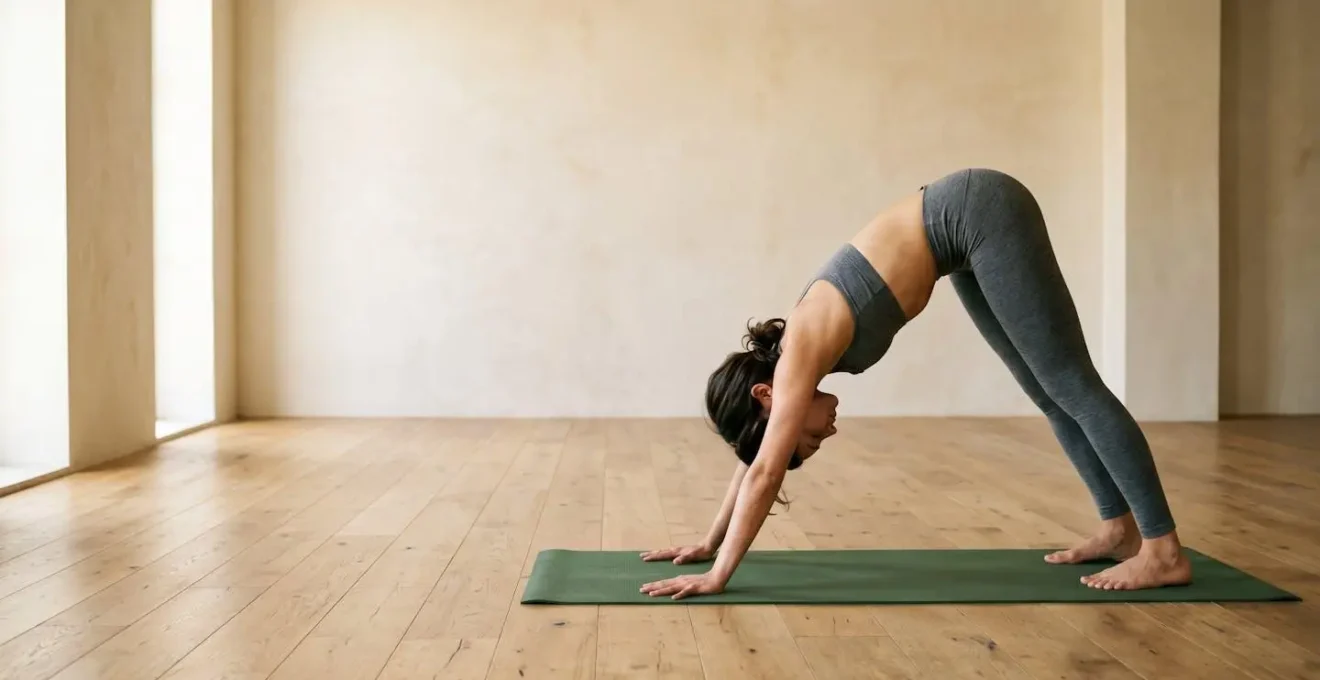
Many see Vinyasa yoga as a way to stretch and get a light workout. But its true power lies deeper. This practice is a sophisticated system for regulating your nervous system and building functional mobility for daily life. By mastering specific breath techniques and alignment principles, you transform a sequence of poses into a powerful tool that actively reduces stress hormones and re-engineers how your body moves, providing benefits that last long after you leave the mat.
As an urban professional, you likely know the feeling: a mind that won’t switch off and a body that feels tight and constrained by hours at a desk. The common advice is to « do some yoga. » Many approach a Vinyasa class expecting a good stretch and perhaps a moment of peace. They focus on nailing the poses, often treating it like another fitness class to check off the list. This approach, however, only scratches the surface of what the practice offers.
The real transformation in Vinyasa doesn’t come from simply mimicking shapes. It comes from understanding it as an integrated system of breath, movement, and awareness. The chronic stress from a high-pressure career isn’t just mental; it’s a physiological state governed by your nervous system. The stiffness you feel isn’t just a lack of flexibility; it’s a loss of functional mobility that impacts how you move through your day. But what if the key wasn’t just to stretch more, but to breathe with more intention? What if fluid movement was less about aesthetics and more about building intelligent core strength?
This guide moves beyond the generic advice. As a senior teacher, I will walk you through the core mechanics that make Vinyasa a potent tool for bio-hacking your well-being. We will explore the science behind yogic breathing, deconstruct common physical hurdles, and reframe the practice not as an escape, but as a method for building resilience. You’ll learn to use your time on the mat to actively down-regulate your nervous system and develop a body that is not just flexible, but strong, capable, and free from pain.
In the following sections, we will deconstruct the essential components of a powerful Vinyasa practice, from the foundational breath to its application in daily life, providing you with a clear roadmap to deepen your understanding and results.
Summary: Unlocking the Power of Vinyasa for Mind-Body Resilience
- Ujjayi Breath: Why Breathing Through Your Nose Is Crucial for Nervous System Regulation?
- Jump Backs: How to Build the Core Strength for a Fluid Sun Salutation?
- Wrist Pain in Down Dog: How to Adjust Your Hand Placement to Avoid Injury?
- Home Practice: How to Structure a 20-Minute Flow That Covers All Body Parts?
- Cardio or Stretch: Does Vinyasa Count as Your Daily Aerobic Exercise?
- The Third World Squat: Why Can’t You Sit Deeply and How to Fix It?
- Box Breathing: The SAS Technique to Lower Stress Hormones in 2 Minutes
- How to Start Functional Training to Improve Mobility for Daily Life?
Ujjayi Breath: Why Breathing Through Your Nose Is Crucial for Nervous System Regulation?
If there is one non-negotiable pillar in Vinyasa, it is the breath. We specifically use a technique called Ujjayi Pranayama, often translated as « Victorious Breath. » It involves a gentle constriction at the back of the throat, creating a soft, oceanic sound as you breathe in and out through your nose. This isn’t just for dramatic effect; it is the primary tool for shifting your physiological state from « fight or flight » (sympathetic nervous system) to « rest and digest » (parasympathetic nervous system).
The magic of Ujjayi lies in its direct influence on the vagus nerve, the main superhighway of your parasympathetic system. The audible vibration and controlled pace of the breath stimulate this nerve, which in turn helps lower your heart rate and blood pressure. It’s a form of conscious self-regulation. As Yoga International notes, « Ujjayi breathing creates a state that is aware and alert, while maintaining a calm internal environment—ultimately lifting our vagal tone. » A higher vagal tone is linked to better stress resilience and overall health.
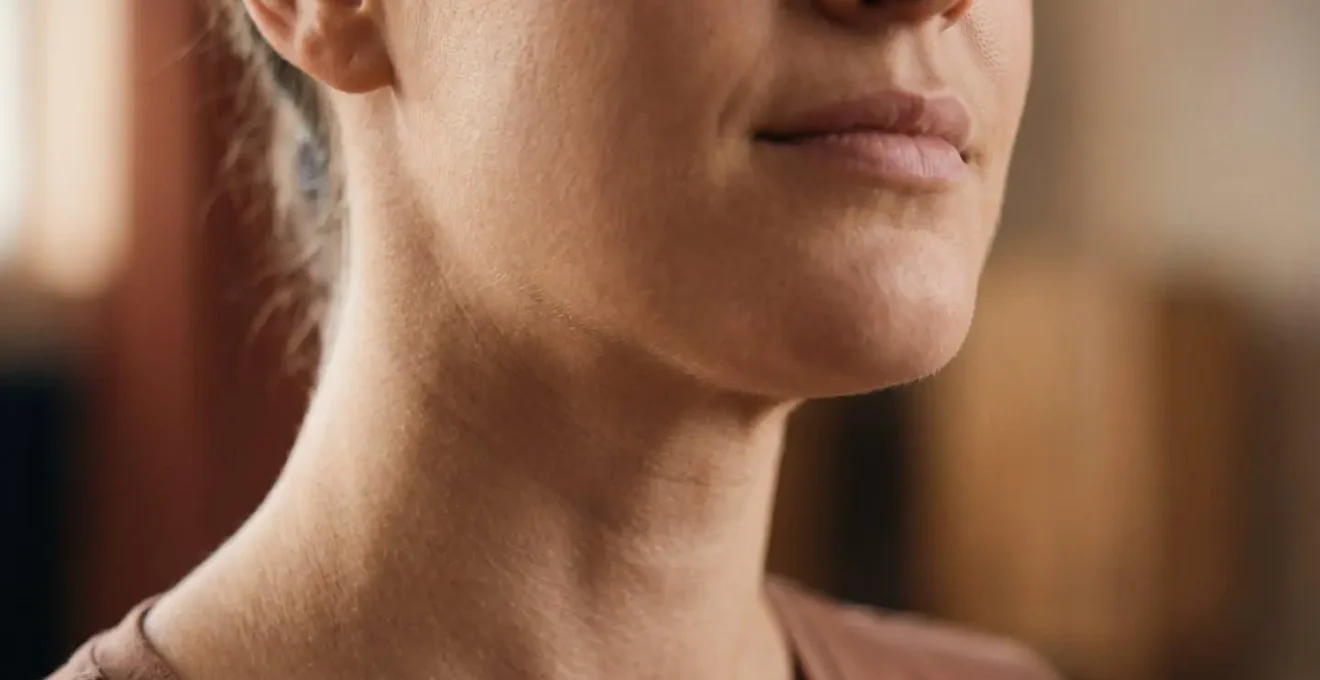
This subtle muscular engagement in the throat transforms breathing from an unconscious act into a mindful anchor. The sound provides real-time feedback, keeping your mind focused and present, preventing it from wandering to your to-do list. The effect isn’t just psychological; it’s deeply physiological. In fact, research from India demonstrates that just six weeks of regular practice can significantly improve vagal functions, proving its efficacy as a stress-management tool. For the busy professional, mastering Ujjayi is like learning to operate the manual override on your body’s stress response.
Jump Backs: How to Build the Core Strength for a Fluid Sun Salutation?
The « flow » in Vinyasa is most apparent in the transitions, particularly the jump back from a forward fold to Chaturanga. Many practitioners either skip this or perform a clunky, heavy hop, feeling that the light « float » is out of reach. The secret to this movement is not brute arm strength; it’s a sophisticated combination of core compression, breath, and shoulder stability. It’s less of a jump and more of a controlled lift, powered by your deep abdominal muscles.
Building this capacity is a process of deconstruction. Instead of just « trying harder, » we build the component parts. The primary challenge, as practitioners often discover, is developing the hip flexor and lower abdominal strength to keep the knees tucked tightly to the chest. This creates a compact, lighter shape. Simultaneously, the muscles of the upper back must engage to stabilize the shoulders, preventing them from collapsing forward.
A progressive approach, reframed as playful exploration rather than a pass/fail test, is most effective. Start by focusing on these key principles:
- Hand-to-Mat Connection: Begin with hands placed between your feet and hips. Practice pressing firmly into the mat, feeling the activation up your arms.
- Compression Strength: Poses like Navasana (Boat Pose) are not just filler; they directly build the abdominal strength needed to lift your lower body and create that « floaty » feeling.
- Using Props: Place blocks under your hands to practice lifting your body weight off the ground. This gives you the feeling of lift without needing the full range of motion yet.
- Breath-Initiated Movement: The lift is powered by a strong, sharp exhale. Connect the physical effort directly to the breath, making it a single, integrated action.
Wrist Pain in Down Dog: How to Adjust Your Hand Placement to Avoid Injury?
Downward-Facing Dog is meant to be a resting pose, but for many, it’s a source of sharp wrist pain. This discomfort is a clear signal of misalignment, not weakness. The root cause is almost always improper weight distribution in the hands. In fact, alignment research shows that the vast majority of practitioners place far too much weight on the delicate heel of the hand, compressing the carpal tunnel, instead of distributing it across the entire palm and fingers.
To fix this, you need to re-educate your hands and shift the load to larger, more capable muscle groups in your upper back and core. This requires developing a more refined proprioceptive awareness—your internal sense of your body’s position in space. Instead of just placing your hands and hoping for the best, you actively engage them. Think of creating a « suction cup » effect with your palms, where the center lifts slightly as the perimeter presses down.
This simple shift can be transformative, but it must be part of a whole-body adjustment. The weight needs to move not just out of the heel of the hand, but back toward your powerful legs. By engaging your core and pressing your hips further back, you change the entire biomechanical equation of the pose, turning it from a wrist-strainer into a full-body lengthener.
Your Action Plan: Eliminating Wrist Pain in Downward Dog
- Finger Mounds: Press firmly into the mounds of your fingers, especially the base of the index finger, to actively lift the heel of the hand very slightly.
- Shoulder Rotation: Engage external rotation in your shoulders by spinning your biceps forward. This small move shifts the load into your larger upper back muscles.
- Core Activation: Draw your navel toward your spine to activate your core. This prevents you from « dumping » your weight forward into your hands.
- Modify the Angle: Use a folded towel or a yoga wedge under the heels of your hands to decrease the angle of extension in your wrists.
- Shift Weight Back: Bend your knees generously. This is not cheating; it allows you to press your hips further up and back, shifting weight toward your legs.
Home Practice: How to Structure a 20-Minute Flow That Covers All Body Parts?
Consistency is more valuable than intensity. A daily 20-minute practice will yield far greater results for a stressed professional than one heroic 90-minute class per week. But a common hurdle to home practice is not knowing how to structure it. An effective, balanced Vinyasa flow doesn’t need to be long, but it does need a logical arc: a beginning, a middle, and an end.
The goal of a short practice is not to exhaust every muscle group, but to move the spine in all directions, build a little heat, and, most importantly, connect with your breath. A well-designed sequence ensures you feel both energized and settled, ready to face your day or wind down in the evening. Think of it as a full-body reset button. The following formula provides a balanced and efficient structure for a complete practice in just 20 minutes.
- Segment 1: Centering & Intention (2 minutes): Begin in a simple pose like Child’s Pose or a comfortable seat. Close your eyes and connect with your Ujjayi breath. Set a simple intention for your practice, like « to stay present » or « to move with kindness. »
- Segment 2: Warm-up & Spinal Movement (4 minutes): Gently awaken the body. Move through several rounds of Cat-Cow to mobilize the spine. Add gentle twists or slow, figure-eight movements with the hips.
- Segment 3: Building Heat (5 minutes): Perform 3 to 5 rounds of Sun Salutation A. Focus on linking one breath to one movement. The goal is to build internal heat and light cardiovascular engagement.
- Segment 4: Standing Poses (5 minutes): This is the peak of the practice. Move through a simple standing series, such as the Warrior poses (Warrior I, Warrior II, Reverse Warrior) on each side. You can add a balancing pose like Tree Pose if time allows.
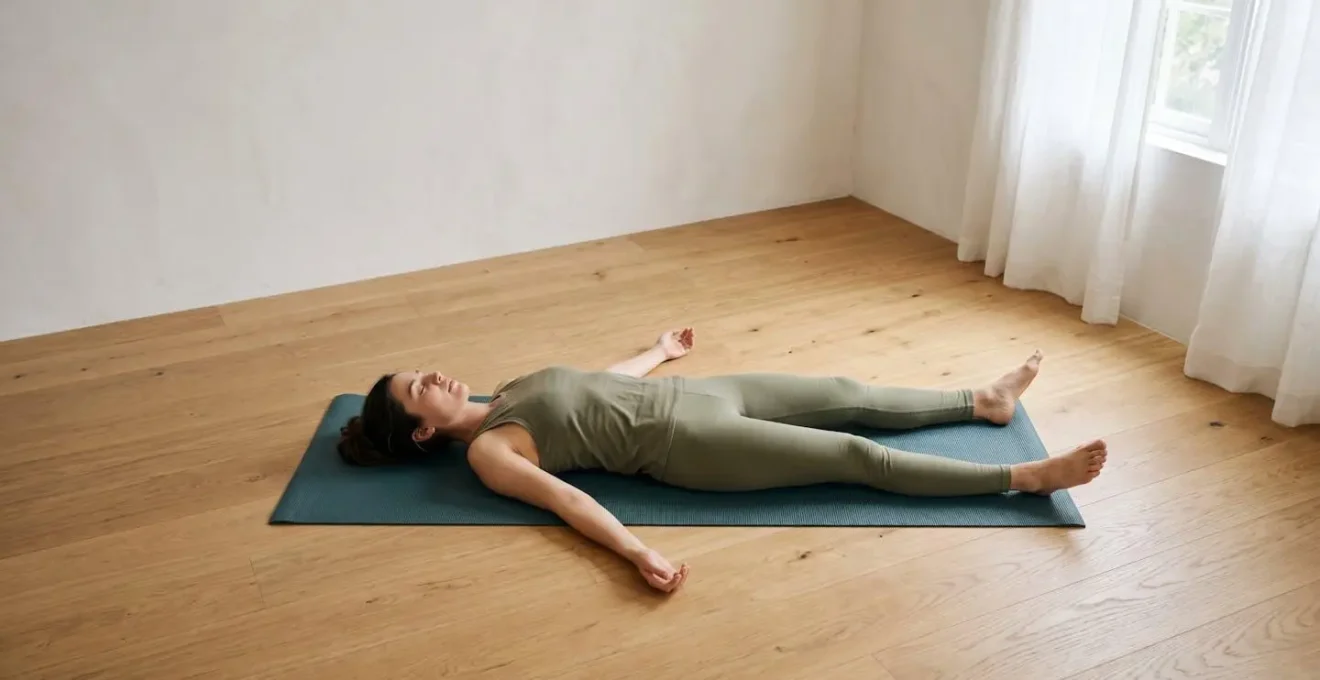
- Segment 5: Cool-down & Integration (4 minutes): Wind down with seated forward folds and gentle reclined twists. Never skip Savasana (Corpse Pose). Even 2-3 minutes of complete stillness is crucial for your nervous system to integrate the benefits of the practice.
Cardio or Stretch: Does Vinyasa Count as Your Daily Aerobic Exercise?
This is a common question, and the answer is nuanced: it depends on the intensity and style of the flow. A fast-paced, powerful Vinyasa class, especially one that includes many Sun Salutations and dynamic transitions like jump-backs, absolutely can elevate your heart rate into the aerobic zone. This provides a significant cardiovascular workout. However, the true benefit for a stressed individual is not just about burning calories; it’s about what happens to your brain and hormonal chemistry during that exertion.
When you synchronize vigorous movement with deep, rhythmic Ujjayi breathing, you create a unique physiological state. You are challenging your cardiovascular system, but the focus on the breath keeps the nervous system from spiraling into a stress response. Instead of just pushing through, you are learning to maintain inner calm amidst physical intensity—a skill directly transferable to managing a high-pressure meeting or a tight deadline.
The hormonal benefits are profound. As confirmed by exercise science, cardiovascular benefits flush out stress hormones like cortisol. Simultaneously, this type of activity stimulates the release of endorphins (the « feel-good » chemicals) and a crucial protein called Brain-Derived Neurotrophic Factor (BDNF). BDNF is like fertilizer for your brain cells, supporting memory, learning, and mood. So, while Vinyasa can count as cardio, its most powerful effect is its ability to be a « stress-busting » cardio that simultaneously builds mental and emotional resilience.
The Third World Squat: Why Can’t You Sit Deeply and How to Fix It?
The deep squat, known in yoga as Malasana, is a fundamental human resting position. Yet for many modern adults, especially those who spend hours in chairs, it feels impossible. The heels lift, the body pitches forward, and the position is one of strain, not rest. Many people assume the limitation is tight hips, and while that can be a factor, the primary culprit is often hidden further down the kinetic chain: limited ankle dorsiflexion.
Ankle dorsiflexion is the ability to flex your foot, drawing your toes toward your shin. When this movement is restricted, your shin cannot move forward over your foot, which is essential for allowing your hips to sink deeply in a squat. This limitation doesn’t just affect your Malasana; it has a domino effect throughout your entire practice. It can cause instability in Warrior poses, limit your depth in forward folds, and force your lower back to compensate and strain during lunges.
Vinyasa practice offers a fantastic way to systematically improve this. Instead of statically stretching your calves, you can incorporate dynamic movements that actively work on ankle mobility within the flow. For example, when in a low lunge with the back knee down, you can gently pulse forward and back, feeling the stretch in the front of the back ankle and the deep flexion in the front ankle. This approach of working on mobility through movement, rather than just passive stretching, is the key to unlocking not just your squat, but a more integrated and capable body.
Box Breathing: The SAS Technique to Lower Stress Hormones in 2 Minutes
While Ujjayi is the foundational breath for the Vinyasa flow itself, there are other techniques that serve as powerful adjuncts, especially for moments of acute stress. One of the most effective and easily accessible is Box Breathing, or Sama Vritti Pranayama. This technique is famously used by Navy SEALs to maintain calm and focus under extreme pressure, and you can use it to reset your nervous system in just a couple of minutes before a big presentation or after a difficult day.
The practice is beautifully simple. It consists of four equal parts, typically a 4-second count for each: inhale for 4, hold the breath in for 4, exhale for 4, and hold the breath out for 4. This square pattern is the « box. » The magic lies in the holds, or `kumbhakas`. The pause after the inhale and the pause after the exhale directly stimulate the parasympathetic nervous system, acting as a powerful brake on the body’s stress response.
You can integrate Box Breathing seamlessly with your Vinyasa practice to enhance its calming effects:
- Pre-Practice: Use two minutes of Box Breathing before you start your flow to quiet a racing mind and set a calm, focused tone.
- During Warm-up: You can apply the 4-count rhythm to your first few Sun Salutations, moving through each pose on a count of four to establish a steady, meditative pace.
- Post-Savasana: Practice for two minutes after your final rest. It acts as a gentle bridge, bringing you from a state of deep rest back to an alert state without a jarring transition.
Key Takeaways
- Vinyasa’s true power is not just stretching, but regulating the nervous system through intentional breath (Ujjayi).
- Fluid movement comes from core compression and breath synchronization, not just arm strength.
- Functional mobility in daily life is a direct result of translating yoga poses into fundamental movement patterns like squatting, lunging, and hinging.
How to Start Functional Training to Improve Mobility for Daily Life?
Ultimately, the goal of any physical practice should be to improve the quality of your daily life. Vinyasa yoga, when understood correctly, is one of the most effective forms of functional training available. Functional training simply means training the body for the activities performed in everyday life. We push, pull, squat, lunge, hinge, and carry things. A well-rounded Vinyasa practice includes all of these fundamental movement patterns, but with an added layer of mindfulness and breath.
Unlike traditional weight training that often isolates muscles, Vinyasa trains them to work together in an integrated, coordinated way. This builds not just strength, but intelligent strength. The continuous flow challenges your stability and proprioception, teaching your body to remain stable and aligned while in motion. This is precisely what you need to lift a heavy box without tweaking your back or play with your kids without feeling stiff and sore.
As Core Yoga Research highlights in their work on functional strength:
Vinyasa trains the nervous system to remain calm and focused under physical exertion, a skill that is directly transferable to managing stressful situations or performing complex physical tasks in daily life.
– Core Yoga Research, Core Yoga Poses for Functional Strength
The table below breaks down how common Vinyasa poses directly map to the fundamental movements of functional training, enhancing them with the unique benefits of breath and awareness.
| Fundamental Movement | Traditional Functional Training | Vinyasa Yoga Equivalent | Additional Benefit in Vinyasa |
|---|---|---|---|
| Pushing | Push-ups, Bench Press | Chaturanga, Plank | Breath synchronization enhances mind-muscle connection |
| Pulling | Rows, Pull-ups | Engaging back in Cobra/Upward Dog | Spinal extension combined with shoulder retraction |
| Squatting | Barbell Squats | Chair Pose (Utkatasana), Malasana | Ankle and hip mobility emphasized over load |
| Lunging | Walking Lunges, Split Squats | Warrior I, II, III series | Balance and proprioception integrated |
| Hinging | Deadlifts, Good Mornings | Forward Folds, Downward Dog | Active hamstring lengthening under load |
| Carrying/Stability | Farmer’s Walks, Loaded Carries | Core stabilization throughout flow | Continuous engagement across multiple planes of motion |
By viewing your practice through this lens, as demonstrated in this comparative analysis of movement patterns, the time you spend on the mat becomes an investment in a more capable, resilient, and pain-free body for all the hours you spend off it.
By shifting your perspective from simply « doing yoga » to actively engaging in a system of nervous system regulation and functional movement training, you unlock the profound and lasting benefits of Vinyasa. It becomes your tool for building a mind that is calm and focused, and a body that is truly fit for life.