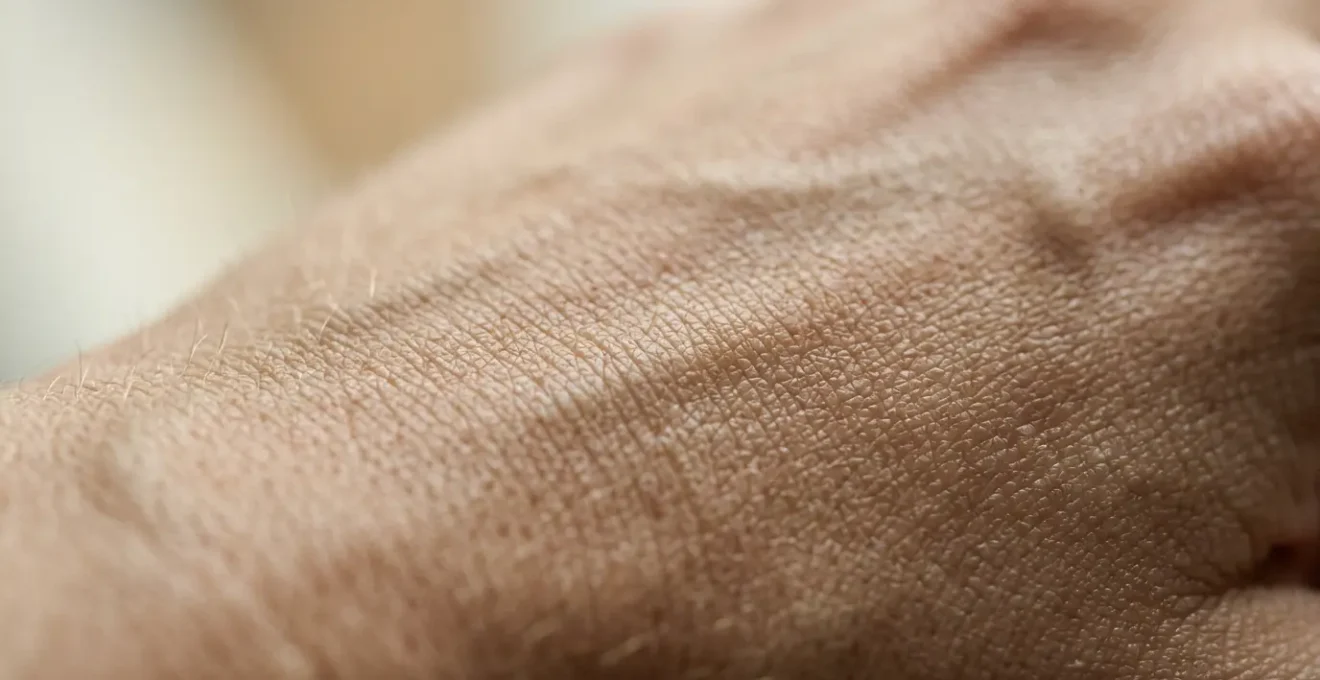
True skin regeneration is not about surface-level treatments; it’s about giving your cells the correct biochemical and mechanical commands to rebuild collagen from within.
- Topical agents like retinoids and copper peptides act as signaling molecules, directly influencing gene expression to stimulate fibroblast activity.
- Internal factors, particularly systemic inflammation and glycation (sugar damage), actively sabotage collagen integrity, making diet a critical component of any anti-aging strategy.
Recommendation: For meaningful, long-term results, the most effective strategy involves a synergistic protocol that combines multiple evidence-backed modalities to both build new collagen and protect existing structures.
For any woman over 40, the mirror can begin to tell a new story—one of subtle softening, a loss of the crisp firmness that once defined the jawline, and the appearance of fine lines that weren’t there before. This narrative is written by the decline of collagen, the skin’s primary structural protein. The conventional response is a flurry of activity: buying promising creams, considering supplements, and adhering to the well-worn advice of « eat well and wear sunscreen. » These are not incorrect, but they often represent a surface-level understanding of a deeply complex biological process.
The common approach often fails because it treats the skin as a passive surface to be coated and patched. It overlooks the fact that the skin is a dynamic, living organ, and that true rejuvenation comes from reactivating its own internal manufacturing processes. The real question is not what to put *on* your skin, but how to send the right signals *into* your skin. What if the key wasn’t just another ingredient, but understanding the precise biochemical language that commands your cells to produce collagen again?
This guide moves beyond the platitudes to provide a researcher’s perspective on dermal regeneration. We will dissect the evidence-backed mechanisms that truly stimulate collagen synthesis. We will explore how specific molecules instruct your cells, how physical stimuli can trigger a rebuilding cascade, and how your diet can either fuel or foil your efforts. This is not just another list of tips; it is a blueprint for cellular activation, designed to empower you with the knowledge to build a truly effective, science-based strategy for restoring your skin’s structural integrity.
This article provides an in-depth exploration of the most potent, science-backed methods for stimulating collagen production. The following summary outlines the key topics we will dissect to build your comprehensive regeneration strategy.
Summary: A Researcher’s Guide to Activating Collagen Synthesis
- Retinol vs Tretinoin: Which Stimulates Collagen Production More Potently?
- Microneedling: Does Poking Holes in Your Skin Really Build Collagen?
- Collagen Supplements: Do Hydrolyzed Peptides Actually Reach Your Skin?
- Copper Peptides: Are They the « Botox in a Bottle » Alternative for Firmness?
- Sugar Sag: How Glycation Destroys Your Existing Collagen Fibers?
- Cell Turnover Rate: Why Does Exfoliation Make Your Skin Glow Instantly?
- Anti-Inflammatory Diets: Which Foods reduce C-Reactive Protein Levels?
- How to Achieve Skin Radiance Using Science-Backed Dermatological Ingredients?
Retinol vs Tretinoin: Which Stimulates Collagen Production More Potently?
Retinoids are the undisputed royal family of dermatological anti-aging, and their power lies in their ability to communicate directly with skin cells. Both Retinol and Tretinoin (a prescription-strength retinoid) work by converting to retinoic acid in the skin. This active form then binds to receptors in the cell’s nucleus, directly influencing gene expression. Essentially, they « tell » the fibroblasts—your skin’s collagen factories—to ramp up production of new, healthy collagen and elastin fibers.
The primary difference between them is potency and conversion. Retinol is a gentler, over-the-counter option that must undergo a two-step conversion process in the skin to become active. This makes it less irritating but also less powerful on a concentration-for-concentration basis. Despite this, its effectiveness is well-documented; research documented a 2.3-fold increase in collagen mRNA in aged skin after just four weeks of topical retinol application.
Tretinoin, on the other hand, is pure retinoic acid. It requires no conversion and gets to work immediately, leading to more dramatic and rapid results. Clinical evidence shows its formidable power, with studies reporting that Tretinoin can reduce fine lines by 40–60% and skin roughness after 6–12 months of consistent use. This potency comes at the cost of higher potential for irritation, including redness, peeling, and dryness, known as the « retinization » period. The choice between them is a trade-off: Tretinoin offers superior collagen-stimulating power, while Retinol provides a more accessible and tolerable entry point into the world of retinoids.
Microneedling: Does Poking Holes in Your Skin Really Build Collagen?
The concept of creating thousands of microscopic punctures in your skin to look younger seems counterintuitive, yet it is one of the most effective non-invasive methods for collagen induction. This process, known as microneedling or percutaneous collagen induction (PCI), leverages the body’s innate wound-healing capabilities. Each micro-injury triggers a controlled healing cascade, the final stage of which is the synthesis of new, high-quality collagen and elastin to repair the perceived damage. This isn’t about damaging the skin, but about tricking it into a state of intensive regeneration.
The core science behind microneedling is a process called mechanotransduction. The physical force of the needles penetrating the dermis creates mechanical stress on the fibroblasts. These cells convert this physical signal into a biochemical response, commanding them to produce growth factors and, most importantly, new collagen. The result is a denser, more organized dermal matrix. The effectiveness of this controlled trauma is staggering, as histological studies demonstrate up to a 400% increase in collagen and elastin deposition six months after a course of treatments.

As the visual above metaphorically represents, this process is a structured transformation. The micro-channels created by the needles not only stimulate this internal rebuilding but also dramatically enhance the absorption of topical treatments applied immediately after, allowing active ingredients like growth factors or peptides to penetrate deeper into the dermis where they can provide further signaling for cellular repair. Therefore, microneedling acts as both a mechanical stimulator and a delivery system, making it a powerful dual-action treatment for restoring skin firmness and texture.
Collagen Supplements: Do Hydrolyzed Peptides Actually Reach Your Skin?
The oral collagen supplement market is booming, but it is accompanied by significant skepticism. The central question is whether ingested collagen can survive stomach acid, be absorbed into the bloodstream, and travel to the skin to exert any real effect. For years, the prevailing belief was that collagen, like any other protein, was simply broken down into random amino acids. However, modern research paints a more sophisticated picture, validating the core premise of supplementation.
The key lies in the form of collagen used: hydrolyzed collagen peptides. This is collagen that has been broken down into smaller, more easily absorbed chains of amino acids. Crucially, studies show that specific peptides, particularly those containing the amino acid hydroxyproline (a unique marker of collagen), are absorbed intact. A 2024 randomized crossover study confirmed the absorption of significant collagen di- and tripeptides from fish, porcine, and bovine sources into the bloodstream.
Once in circulation, these peptides are believed to act in two ways. First, they provide the specific building blocks needed for the body to construct its own collagen. Second, and perhaps more importantly, they act as signaling molecules. The presence of these collagen fragments in the bloodstream is thought to signal to fibroblasts that there has been a breakdown of collagen somewhere in the body, which in turn stimulates them to increase their own production. Further research suggests that the source matters, with some evidence indicating that the absorption of hydrolyzed marine collagens may be up to 1.5 times more efficient than those from land mammals due to their specific amino acid profile. While not a magic bullet, the evidence now strongly suggests that hydrolyzed collagen peptides do, in fact, reach the skin and can contribute to its hydration and elasticity.
Copper Peptides: Are They the « Botox in a Bottle » Alternative for Firmness?
While the « Botox in a bottle » moniker is an overstatement for any topical, copper peptides—specifically GHK-Cu—stand out as one of the most scientifically robust ingredients for skin firmness. GHK-Cu is a naturally occurring complex found in human plasma that declines with age. Its regenerative capabilities are extensive, acting as a powerful signaling agent that promotes wound healing, antioxidant activity, and, most importantly, collagen synthesis.
Unlike many ingredients that simply provide building blocks, copper peptides work at a more fundamental level. As an expert in the field explains, their mechanism is deeply rooted in cellular communication. As Yuvan Research Inc. detailed in their findings, GHK-Cu’s power comes from its ability to modulate our own biology:
GHK-Cu affects 31.2% of the human genes by either activating or deactivating them, meaning that it works by inducing epigenetic alterations in the cells.
– Yuvan Research Inc., Epigenetic mechanisms activated by GHK-Cu increase skin collagen density in clinical trial
This means GHK-Cu can help reset older cells to a more youthful state, instructing them to not only build more collagen and elastin but also to break down the damaged, cross-linked collagen that contributes to a dull, uneven texture. Clinical evidence supports these claims. A 2023 trial showed a 28% average increase in collagen density after three months of daily application, with the top responders achieving an incredible 51% increase. This positions copper peptides as a premier, evidence-backed tool for rebuilding the skin’s structural architecture.
Sugar Sag: How Glycation Destroys Your Existing Collagen Fibers?
While much focus is placed on building new collagen, protecting the collagen you already have is equally critical. One of the most insidious and silent destroyers of your skin’s structural integrity is a process called glycation. This occurs when excess sugar molecules in your bloodstream attach themselves to proteins, including the collagen and elastin fibers in your skin. This haphazard bonding process creates harmful new molecules called Advanced Glycation End-products (AGEs).
These AGEs are profoundly damaging. They cause the normally flexible and resilient collagen fibers to become rigid, brittle, and cross-linked. This makes the entire dermal support structure stiff and weak, preventing it from functioning properly. The result is a visible acceleration of aging: loss of elasticity, increased wrinkling, and a phenomenon often referred to as « sugar sag, » where the skin loses its ability to bounce back. Furthermore, glycated collagen is less susceptible to normal cellular turnover, meaning this damaged material lingers in the skin, and the fibroblasts are less able to produce new, healthy collagen to replace it.

The damage is cumulative and begins early in life, accelerating as we age and our natural antioxidant defenses decline. The visual metaphor above illustrates this degradation, contrasting healthy, organized fibers with the disorganized, brittle state of glycated collagen. Minimizing glycation is a cornerstone of any serious anti-aging strategy and primarily involves dietary management—specifically, reducing the intake of refined sugars, simple carbohydrates, and processed foods that cause sharp spikes in blood glucose. This internal defense is just as crucial as any topical treatment you apply.
Cell Turnover Rate: Why Does Exfoliation Make Your Skin Glow Instantly?
The immediate « glow » from exfoliation is often attributed to simply removing the top layer of dead, dull skin cells (the stratum corneum). While this is true, the long-term benefits of consistent, proper exfoliation go much deeper, directly influencing collagen production. As we age, our skin’s ability to replenish its own structural proteins declines; research shows the ability to replenish collagen naturally decreases by about 1.0% per year in aging skin. Speeding up cell turnover with exfoliation helps counteract this slowdown.
The key is the type of exfoliant used. Chemical exfoliants, particularly Alpha-Hydroxy Acids (AHAs) like glycolic acid, are small enough to penetrate beyond the surface layer and into the upper dermis. This penetration creates a low-level, controlled inflammatory signal. In response to this signal, the skin initiates a repair process. As dermatology researchers have found, this sustained, low-grade response « prompts fibroblasts to increase collagen production as a repair response. »
Therefore, exfoliation is not just about superficial clearing; it’s another form of signaling. By consistently removing the old and signaling a need for repair, you are encouraging the skin’s regenerative cycle. This not only maintains a radiant surface but also contributes to the long-term density and health of the dermal matrix. It’s a proactive strategy that keeps the cellular machinery active and efficient, preventing the stagnation that leads to visible aging. The immediate glow is a pleasant side effect of a much more profound biological process.
Anti-Inflammatory Diets: Which Foods reduce C-Reactive Protein Levels?
The link between diet and skin health is often reduced to simplistic advice like « drink more water. » However, the scientific connection is far more direct and operates at the level of systemic inflammation. A pro-inflammatory diet—rich in sugar, refined carbohydrates, and processed fats—creates a state of chronic, low-grade inflammation throughout the body. This inflammation is a primary accelerator of aging, a process sometimes termed « inflammaging. »
From a dermatological perspective, this is critically important because, as researchers note, « Systemic inflammation upregulates matrix metalloproteinases (MMPs)—enzymes that actively degrade existing collagen and elastin in the skin. » These enzymes are essentially collagen-destroying machines. No matter how much effort you put into building new collagen with topicals and treatments, a pro-inflammatory diet ensures that your MMP enzymes are working overtime to break it down. Reducing systemic inflammation, often measured by markers like C-Reactive Protein (CRP), is therefore fundamental to preserving your skin’s structural framework.
Adopting an anti-inflammatory diet involves prioritizing foods that actively inhibit these inflammatory pathways. Key compounds include:
- Omega-3 Fatty Acids: Found in fatty fish like salmon and mackerel, they inhibit the arachidonic acid pathway, reducing the production of pro-inflammatory signals that can upregulate MMPs.
- Polyphenols: Abundant in berries, green tea, and dark chocolate, these compounds inhibit the NF-κB transcription factor, a master regulator of inflammatory genes linked to skin aging.
- Curcumin: The active component in turmeric, it directly inhibits inflammatory enzymes like COX-2, reducing the mediators that accelerate collagen breakdown.
- Prebiotic Fiber & Fermented Foods: By supporting a healthy gut microbiome, foods like yogurt, kefir, and high-fiber vegetables prevent inflammatory endotoxins from the gut entering the bloodstream and damaging skin collagen.
Action Plan: Your Collagen-Boosting Lifestyle Audit
- Identify Signal Channels: List all the ways you are currently trying to « signal » collagen synthesis (e.g., specific topicals, supplements, dietary choices, treatments).
- Inventory Existing Inputs: For one week, honestly log your current regimen. What specific products are you using? What are your typical meals?
- Assess for Coherence: Compare your inputs. Are you eating a high-sugar diet (pro-glycation) while using expensive anti-aging serums? Identify these contradictions that sabotage your efforts.
- Evaluate for Efficacy: For each input, ask: is this method backed by scientific evidence (like the ones in this guide), or is it based on marketing hype? Prioritize evidence-based actions.
- Create an Integration Plan: Based on your audit, decide on one thing to add (e.g., a retinoid) and one thing to remove (e.g., daily sugary drinks) for the next 30 days. Measure and observe.
Key Takeaways
- Collagen synthesis is not a passive process; it must be actively triggered by specific cellular signals, which can be biochemical (e.g., retinoids), mechanical (e.g., microneedling), or dietary.
- Protecting existing collagen from degradation by internal factors like glycation (sugar damage) and chronic inflammation is just as critical as stimulating new production.
- The most significant and lasting results in dermal regeneration come from a synergistic, multi-pronged approach that combines several evidence-backed modalities simultaneously.
How to Achieve Skin Radiance Using Science-Backed Dermatological Ingredients?
Achieving true, lasting skin radiance and firmness is not the result of a single « miracle » product, but the outcome of a holistic, synergistic strategy that leverages multiple scientific principles. It requires activating synthesis, protecting existing structures, and optimizing your body’s natural rhythms. For instance, even the timing of your routine matters. Research on circadian skin biology indicates that skin repair processes, including collagen synthesis, peak during the night, generally between 11 PM and 4 AM. Applying signaling ingredients like retinoids or peptides before sleep aligns your treatment with your body’s innate regenerative schedule.
Ultimately, the most powerful approach is one that combines different collagen-stimulating modalities to create a result greater than the sum of its parts. Mechanical injury from microneedling can be amplified by the immediate application of biochemical signals like growth factors or copper peptides. The collagen-building effects of a retinoid can be supported by a diet that provides the necessary amino acid building blocks and prevents inflammatory degradation.
Case Study: The Power of a Synergistic Approach
A randomized controlled trial published in the *Journal of Clinical and Aesthetic Dermatology* evaluated the effects of combining microneedling with topical human recombinant growth factors. The study, involving female patients aged 35-60, demonstrated that this dual-modality approach produced superior outcomes compared to single-modality treatments. Clinically measurable improvements in skin texture, pigmentation, and structural architecture became evident within 8-12 weeks, proving that layering a mechanical stimulus with a potent biochemical signal creates a powerful regenerative synergy.
Building a protocol is about creating a pro-collagen environment. This involves using evidence-backed topicals to send the right signals, considering procedures that trigger the body’s repair mechanisms, and adopting a lifestyle that provides the raw materials while minimizing the destructive forces of glycation and inflammation. This is the blueprint for true dermal regeneration.
The next logical step is to move from theory to practice. Begin by assessing your current routine and lifestyle using the audit principles, then strategically integrate one or two evidence-backed modalities to create a personalized, synergistic protocol for your skin’s regeneration.