Achieving genuine skin radiance comes not from a long list of trendy ingredients, but from understanding their precise biological function within your skin’s cellular machinery.
- Effective exfoliation is about respecting your skin’s natural turnover rate, which slows with age, not just aggressive scrubbing.
- True hydration depends on an ingredient’s molecular weight, which determines if it plumps the skin from within or simply hydrates the surface.
- Fading dark spots involves targeting the specific melanin production pathway, a job for specialized ingredients like Vitamin C and Arbutin.
Recommendation: Build your routine by selecting ingredients that target specific biological pathways, ensuring every product in your cabinet serves an intelligent, evidence-based purpose.
Your bathroom cabinet is likely a museum of skincare trends. Bottles of hyaluronic acid, vitamin C serums, and exfoliating toners promise a singular, coveted prize: radiant, glowing skin. Yet, for many, the path to that glow is a frustrating cycle of trial, error, and confusion, fueled by marketing buzzwords that obscure the actual science. As a cosmetic dermatologist, I see patients daily who are armed with popular ingredients but lack the fundamental knowledge of how they truly function.
The common advice to « use an antioxidant » or « hydrate your skin » is not wrong, but it is incomplete. It fails to explain the intricate biological pathways these ingredients influence. The secret to unlocking lasting radiance doesn’t lie in simply collecting these products; it lies in understanding their specific roles within your skin’s complex ecosystem. It’s about moving beyond the « what » and mastering the « why » and « how. »
This guide is designed to be your dermatological translator. We will move past the hype and delve into the cellular machinery at work. By comparing key ingredients, examining their mechanisms of action, and understanding their relationship with your skin’s natural rhythms, you will gain the clarity needed to build a routine that is not just trendy, but truly intelligent and effective. This is how you stop guessing and start seeing visible, science-backed results.
To navigate this complex but fascinating world, we will break down the core pillars of skin radiance. The following sections explore the scientific principles behind the glow, from cellular renewal to barrier repair, providing you with the knowledge to make informed decisions for your skin’s health.
Summary: Decoding the Science of Skin Radiance
- Cell Turnover Rate: Why Does Exfoliation Make Your Skin Glow Instantly?
- Hyaluronic Acid vs Glycerin: Which Humectant Plumps Skin Better?
- Vitamin C vs Arbutin: Which Ingredient Fades Dark Spots Faster?
- Carotenoids: Can Eating Carrots and Sweet Potatoes Really Change Your Skin Tone?
- The Circadian Rhythm of Skin: Why Nighttime Is Critical for Repair?
- Foam vs Cream Cleanser: Which Strips Less Oil from Your Skin?
- How to Use LinkedIn to Showcase Your New Skills to Recruiters Effectively?
- How to Repair a Damaged Lipid Barrier to Stop Irritation and Breakouts?
Cell Turnover Rate: Why Does Exfoliation Make Your Skin Glow Instantly?
The « instant glow » you notice after exfoliating is a direct result of manipulating your skin’s natural renewal process, known as cell turnover. Your skin is in a constant state of regeneration: new skin cells are born in the deepest layer of the epidermis and gradually migrate to the surface, where they mature, die, and eventually slough off. This process ensures your skin remains a robust, protective barrier. However, the speed of this cycle changes dramatically throughout our lives.
In children, this entire journey takes about 14 days, resulting in naturally bright and smooth skin. As we enter adulthood, this process slows considerably. In fact, research on cellular turnover reveals that the cycle extends to 28-30 days in young adults and can slow to 45-90 days in later life. When this turnover slows, dead cells accumulate on the surface, creating a rough, dull, and uneven texture that scatters light instead of reflecting it, diminishing your skin’s natural luminosity.
Exfoliation, whether chemical (with acids like AHAs or BHAs) or physical, manually removes this layer of accumulated dead cells. This action immediately reveals the newer, plumper, and more vibrant cells underneath. This is why your skin appears brighter and smoother almost instantly. More importantly, this process sends a signal to the deeper layers of your skin to accelerate the production of new cells, helping to maintain a more youthful turnover rate over time. It’s a fundamental step not just for a temporary glow, but for long-term skin health and vitality.
Hyaluronic Acid vs Glycerin: Which Humectant Plumps Skin Better?
In the world of hydration, humectants are king. These ingredients act like magnets, drawing water from the deeper layers of the skin and the environment into the stratum corneum (the outermost layer). Hyaluronic Acid (HA) and Glycerin are two of the most effective and common humectants, but they don’t work in exactly the same way. The key difference lies in their molecular weight and structure, which dictates their ability to plump the skin.
Glycerin is a small, simple molecule that rapidly penetrates the skin’s surface, providing immediate and effective hydration. It’s a reliable, time-tested ingredient that helps improve skin barrier function. Hyaluronic Acid, on the other hand, is a much larger sugar molecule that comes in various sizes. This is where the marketing claims of « holding 1000x its weight in water » can be misleading. The molecule’s size determines where it delivers that hydration.
High Molecular Weight (HMW) HA is too large to penetrate the skin. It sits on the surface, forming a breathable film that draws moisture to it, giving a temporary plumping and smoothing effect. Low Molecular Weight (LMW) HA, however, is a different story. As Raman spectroscopy research confirms, LMW HA (20-300 kDa) can penetrate the stratum corneum, delivering water to deeper levels for more sustained hydration and a true plumping effect from within. This distinction is critical for achieving more than just surface-level smoothness.
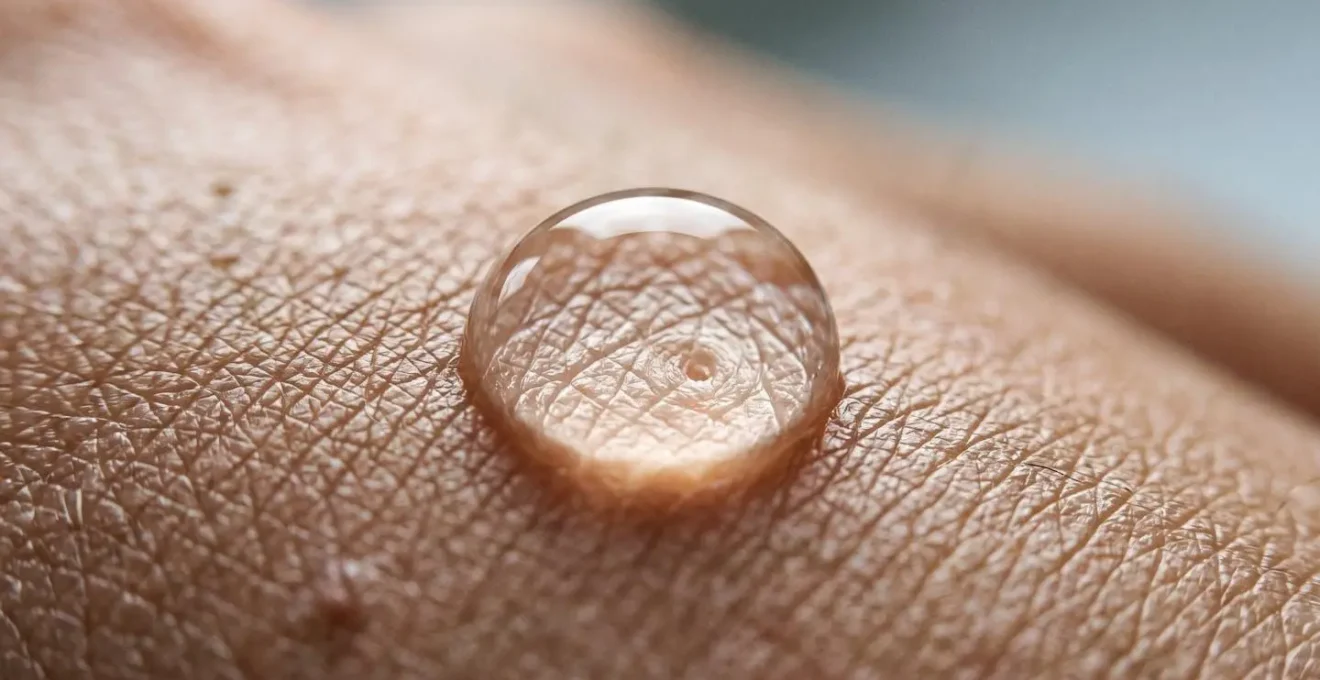
As you can see, the goal is to provide moisture at multiple levels. An ideal hydrating product might contain both glycerin for its reliability and multiple weights of hyaluronic acid. This multi-level approach ensures both immediate surface smoothness and deeper, more lasting skin plumpness. Ultimately, neither is « better »—they are different tools for the same goal, and their combined use offers the most comprehensive benefit.
Vitamin C vs Arbutin: Which Ingredient Fades Dark Spots Faster?
Dark spots, or hyperpigmentation, are the result of excess melanin production, often triggered by sun exposure, inflammation, or hormonal changes. The biological pathway responsible for this is controlled by an enzyme called tyrosinase. To effectively fade dark spots, an ingredient must inhibit this enzyme’s activity. Vitamin C (specifically L-Ascorbic Acid) and Arbutin are two of the most powerful tyrosinase inhibitors available in skincare, but they tackle the problem through slightly different mechanisms.
Vitamin C is a potent antioxidant that offers broad-spectrum benefits, including collagen production and photoprotection. When it comes to pigmentation, its primary role is to interrupt the melanin synthesis process. As a study on tyrosinase inhibition explains, Vitamin C binds with the copper ions that are essential for the tyrosinase enzyme to function, effectively neutralizing its ability to create pigment. This not only helps fade existing spots but also prevents new ones from forming. However, Vitamin C is notoriously unstable and can be irritating at high concentrations.
Arbutin, derived from the bearberry plant, is a more targeted molecule. It is a glycoside of hydroquinone, the prescription-strength skin-lightening agent. Arbutin works by acting as a competitive inhibitor, essentially « pretending » to be tyrosine (the amino acid that tyrosinase acts upon) and binding to the enzyme’s active site. This blocks the real tyrosine from binding, halting melanin production at its source. A 2025 study in Scientific Reports confirms that β-arbutin is widely used for significant skin-lightening with relatively low cytotoxicity, making it a powerful yet gentler alternative to ingredients like hydroquinone. While Vitamin C offers a wider range of skin benefits, Arbutin provides a more direct and often more stable approach specifically for targeting hyperpigmentation.
Carotenoids: Can Eating Carrots and Sweet Potatoes Really Change Your Skin Tone?
The concept of « eating your way to glowing skin » is more than just a wellness cliché; it has a firm basis in dermatological science, particularly concerning a class of pigments called carotenoids. Found in yellow, orange, and red fruits and vegetables like carrots, sweet potatoes, and bell peppers, these powerful antioxidants can genuinely alter and improve your skin tone from the inside out.
When you consume carotenoids, they are transported through your bloodstream and accumulate in various tissues, including the skin. This deposition imparts a subtle golden or yellowish hue, a phenomenon that is perceived as healthy and attractive. In fact, research published in Frontiers in Psychology demonstrates that higher aerobic fitness and lower body fat independently predict increased skin yellowness, suggesting a link between a healthy lifestyle and this carotenoid-driven glow. This « carotenoid coloration » can help counteract sallowness and contributes to an overall appearance of vitality.
Beyond simply adding color, carotenoids like lutein and zeaxanthin offer significant protective benefits. They are potent antioxidants that help neutralize free radical damage from UV exposure and have anti-inflammatory properties. Their ability to improve skin tone has been clinically validated.
Clinical Trial: Oral Supplementation for Skin Tone Improvement
A randomized, double-blind, placebo-controlled clinical trial was conducted over 12 weeks with 50 healthy subjects. The results demonstrated that oral supplementation with the carotenoids lutein and zeaxanthin isomers led to a measurable improvement in overall skin tone and a visible skin-lightening effect. The researchers attributed this to the carotenoids’ ability to inhibit the melanin production pathway, decrease inflammatory cytokines, and increase the skin’s own antioxidant defenses. This provides strong evidence that dietary intake can directly and positively impact skin luminosity.
So, yes, a diet rich in colorful fruits and vegetables can indeed change your skin tone. It is a foundational, long-term strategy for building radiant skin from within, complementing the effects of any topical products you use.
The Circadian Rhythm of Skin: Why Nighttime Is Critical for Repair?
Your skin, like the rest of your body, operates on a 24-hour internal clock known as the circadian rhythm. This biological schedule dictates a wide range of functions, from oil production to cell repair. Understanding your skin’s chronobiology is essential, as it reveals why the nighttime is not just a period of rest, but the most active and critical window for regeneration and repair. Ignoring this rhythm is like swimming against the current; working with it amplifies the results of your skincare routine.
During the day, your skin is in defense mode. Its primary job is to protect itself from environmental aggressors like UV radiation, pollution, and physical stress. As a result, functions like sebum production are at their peak to maintain the protective barrier. At night, however, the script flips entirely. With the environmental onslaught over, your skin switches to repair mode. Blood flow to the skin increases, allowing for better nutrient delivery and waste removal.
Most importantly, this is when cellular regeneration goes into overdrive. Dermatological chronobiology research indicates that skin cell renewal and DNA repair peak between 10 p.m. and 4 a.m., driven by a natural rise in human growth hormone. During these critical hours, the rate of cell division can nearly double. This is the optimal time for your skin to heal damage from the day, build new collagen, and fortify its structure. Applying products with active ingredients like retinoids, peptides, or exfoliants at night ensures they are working in synergy with your skin’s natural repair processes, maximizing their efficacy.

Therefore, your evening skincare routine should be considered the most important therapeutic session for your skin. It’s an opportunity to provide the tools—antioxidants, hydrators, and repair-focused actives—that your skin’s cellular machinery needs to perform its essential nighttime work, leading to a healthier, more resilient, and visibly radiant complexion by morning.
Foam vs Cream Cleanser: Which Strips Less Oil from Your Skin?
The first step of any effective skincare routine is cleansing, but the wrong cleanser can sabotage all subsequent efforts. A common mistake is choosing a formula that is too harsh, stripping the skin of its natural oils and compromising its protective barrier. This often comes down to a choice between foam and cream cleansers, and the key difference lies in their surfactant systems and their effect on your skin’s acid mantle.
Your skin’s surface is naturally protected by a thin, slightly acidic film called the acid mantle. Dermatological studies confirm that healthy skin maintains a naturally acidic pH of approximately 5.5. This acidity is crucial for keeping the lipid barrier intact, warding off harmful bacteria, and maintaining optimal moisture levels. When this barrier is disrupted by alkaline products, the skin becomes vulnerable to dryness, irritation, and even breakouts.
Foaming cleansers often derive their satisfying lather from potent surfactants like Sodium Lauryl Sulfate (SLS). While effective at removing dirt and oil, these surfactants are typically more alkaline and can be aggressive, stripping the acid mantle and leaving the skin feeling tight and « squeaky clean »—a sensation that actually signals damage. This is particularly detrimental for those with dry or sensitive skin.
Cream cleansers, by contrast, are generally formulated with milder surfactants and are rich in emollients and fatty acids. They cleanse the skin more gently, dissolving impurities without aggressively stripping away the skin’s essential lipids. They help maintain the skin’s acidic pH and support barrier function. For those with oily or acne-prone skin, a foaming cleanser might seem appealing, but it can trigger a rebound effect where the skin overproduces oil to compensate for the stripping. In many cases, a gentle cream or gel cleanser is a superior choice for all skin types to maintain long-term balance and health.
How to Use LinkedIn to Showcase Your New Skills to Recruiters Effectively?
While presenting your professional skills on platforms like LinkedIn is a crucial part of career growth, our focus here, as dermatologists, is on a different kind of renewal—that of your skin. Just as a polished profile reflects your expertise, a radiant complexion reflects your skin’s underlying health. Let us therefore return to the biological « skills » and structures your skin needs to function at its best, starting with its most critical defensive component: the lipid barrier.
Key Takeaways
- True radiance is a sign of skin health, achieved by understanding and supporting its biological functions, not just by applying topical products.
- Key factors like cell turnover rate, hydration levels, and pigment production can be intelligently managed with the right, evidence-backed ingredients.
- A holistic approach that includes diet (carotenoids) and respects the skin’s natural circadian rhythm is just as important as a topical routine.
How to Repair a Damaged Lipid Barrier to Stop Irritation and Breakouts?
The lipid barrier is your skin’s first line of defense. This outermost layer is a highly organized matrix of lipids—fats—that prevents water from escaping (transepidermal water loss) and blocks irritants, allergens, and bacteria from entering. When this barrier is damaged, often from over-exfoliation, harsh cleansers, or environmental stress, the skin becomes a gateway for problems. The result is a cascade of issues: chronic dehydration, redness, sensitivity, and even breakouts, as the skin is no longer able to protect itself.
Repairing this barrier is paramount for achieving calm, clear, and radiant skin. The common advice is to simply « add ceramides » to your routine, but the science is more nuanced. As a clinical review from US Dermatology Partners highlights, the barrier’s strength comes from a precise, synergistic blend of lipids:
the barrier is not just made of ceramides, but a precise matrix of Ceramides, Cholesterol, and Free Fatty Acids with studies suggesting formulas using an optimized ratio repair the barrier significantly faster.
– US Dermatology Partners
This « golden ratio, » often cited as 3:1:1 (Ceramides:Cholesterol:Fatty Acids), mimics the skin’s natural composition, providing the exact building blocks it needs for repair. Seeking out moisturizers formulated with this complete lipid blend is far more effective than using a product with ceramides alone. In addition to topical support, repairing the barrier requires removing the source of the damage. This means simplifying your routine, pausing all harsh actives and exfoliants, and using only gentle, supportive products until the skin has healed.
Action Plan: Repairing Your Lipid Barrier
- Identify & Eliminate Triggers: Audit your current routine. Immediately stop using all strong exfoliants (high-concentration acids, scrubs), retinoids, and foaming cleansers with harsh surfactants (like SLS).
- Cleanse Gently: Switch to a pH-balanced, creamy, or milky cleanser that does not leave your skin feeling tight or stripped. Cleanse only once a day in the evening if your skin is severely compromised.
- Replenish with a Barrier-Specific Moisturizer: Choose a moisturizer explicitly formulated with the ceramide, cholesterol, and fatty acid trio. Apply it liberally to damp skin morning and night.
- Add Soothing Ingredients: Incorporate products with calming agents like Niacinamide, Centella Asiatica (Cica), or Panthenol to reduce inflammation and support the healing process.
- Be Patient & Protect: Barrier repair takes time—typically at least 2-4 weeks. During this period, be diligent with broad-spectrum sunscreen every day, as a damaged barrier is more susceptible to UV damage.
By shifting your focus from chasing temporary glows to fundamentally supporting your skin’s health, you are making the most meaningful investment in its long-term radiance. Begin today by evaluating your routine through this new, evidence-based lens to build a smarter, more effective path to the healthy skin you deserve.