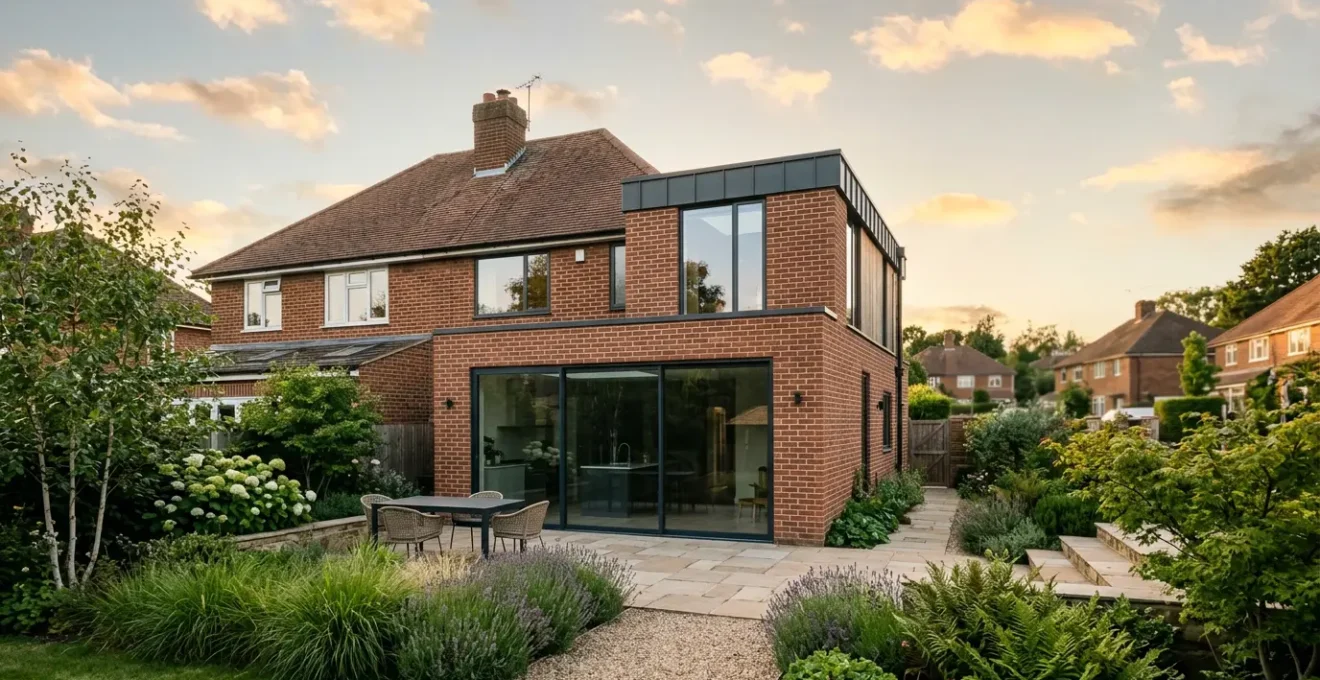
The key to a successful home extension isn’t just knowing the rules, but using them strategically to maximize value and avoid costly pitfalls.
- Permitted Development (PD) allows significant extensions (up to 6 metres) without full planning, but is subject to critical constraints like boundary heights and Article 4 Directions.
- A « fabric-first » approach and a Lawful Development Certificate are non-negotiable for de-risking your project financially and legally.
Recommendation: Before spending a penny, conduct a 30-minute digital feasibility study to assess your property’s true development potential.
Every homeowner dreams of more space. A sun-drenched kitchen extension for family breakfasts, a quiet garden office, or a new bedroom in the loft. But the vision is often clouded by the daunting prospect of a long, expensive, and uncertain planning permission battle with the local council. This is where Permitted Development (PD) rights come in, offering a powerful route to extend and improve your home without needing to go through the full planning process.
Many people know the basics—that you can build certain things without formal permission. However, this knowledge is often dangerously incomplete. The internet is filled with simple lists of rules that miss the most critical details, the hidden traps that can turn a dream project into a legal nightmare. Simply knowing you *can* extend isn’t enough. The real question is how you can do it smartly.
As an architect specializing in residential extensions, I see homeowners make the same costly mistakes. They focus only on the planning rules and completely ignore the equally important Building Regulations. They don’t check for local restrictions that remove their PD rights, or they build something that technically complies but fails to add any real value to their property. This guide is designed to change that. It’s not just a list of rules; it’s a strategic roadmap. We will move beyond the « what » and into the « how » and « why, » giving you the architect’s perspective on unlocking your home’s hidden value and, crucially, de-risking your investment.
We’ll explore the real-world opportunities your home holds, from ground-floor extensions to loft conversions and garden rooms. By understanding the strategic nuances, you can navigate the system with confidence and ensure your project is a resounding success, both structurally and financially.
Summary: A Strategic Guide to Unlocking Your Home’s Value with Permitted Development
- The 6-Meter Rule: How Far Can You Extend a Semi-Detached House Without Planning?
- Dormer vs Velux: Which Loft Conversion Falls Under Permitted Development?
- Garden Offices: How Big Can You Build a « Shed » Before It Needs Permission?
- Garage Conversions: Do You Need Planning to Turn a Garage Into a Living Room?
- Lawful Development Certificate: Why You Should Get One Even If You Don’t Need Planning?
- Green Belt vs Brownfield: Where Will the Council Actually Let You Build?
- Heat Pumps vs Gas Boilers: Is It Time to Switch Your Heating System?
- How to Assess Raw Land Potential for Profitable Development?
The 6-Meter Rule: How Far Can You Extend a Semi-Detached House Without Planning?
One of the most significant opportunities under Permitted Development is the ability to build a single-storey rear extension. For many homeowners, this is the key to creating a large, open-plan kitchen-diner. The rules are generous but precise. Under the enhanced allowances, you can extend up to 6 metres for a semi-detached house (and an even larger 8 metres for a detached property) without full planning permission.
However, the measurement is critical. This distance is measured from the « original rear wall » of the property, meaning the wall as it stood on 1 July 1948 or when it was first built, if later. Any existing extensions, even small ones, do not reset this starting point. It’s a common and costly mistake to measure from a later addition. Furthermore, the extension must not exceed 4 metres in height, and the eaves height (where the wall meets the roof) cannot be higher than the eaves of the existing house.
To properly visualize this, consider the architectural principles behind the measurement. The intent of the law is to control the impact on neighbouring properties, which is why the original footprint is the baseline.

As this detail shows, understanding the starting point of your measurement is fundamental to strategic compliance. Getting this wrong can lead to enforcement action from the council, forcing you to tear down your new extension. This rule applies only to rear extensions; side extensions have their own, more restrictive, set of rules.
Dormer vs Velux: Which Loft Conversion Falls Under Permitted Development?
A loft conversion is often the most cost-effective way to add an extra bedroom and bathroom, significantly increasing your home’s value. Under Permitted Development, most lofts can be converted without a full planning application, provided they stay within specific volume limits. The two primary methods are Velux (or rooflight) conversions and dormer conversions, and both can fall under PD rights.
A Velux conversion is the simplest, involving adding windows into the existing roof slope. It’s cheaper and faster but provides limited headroom. A dormer conversion involves building a structural extension that projects vertically from the slope of the roof, creating a box shape. This dramatically increases the amount of usable, full-height floor space, making it a far superior option for creating a functional room. Both types are subject to a volume allowance: you cannot add more than 40 cubic metres to a terraced house or 50 cubic metres to a semi-detached or detached house. This volume includes any previous loft additions.
The choice between them often comes down to budget versus function. The following table breaks down the key differences to help you make a strategic decision.
| Feature | Velux Conversion | Dormer Conversion |
|---|---|---|
| Average Cost (UK 2024-2026) | £30,000 – £35,000 | £40,000 – £60,000 |
| Usable Floor Space Gained | Moderate (limited by roof pitch) | High (full headroom throughout) |
| Headroom Quality | Restricted to center ridge area | Full 2.2m+ height across wider area |
| Volume Allowance (PD) | 40m³ (terraced) / 50m³ (other) | 40m³ (terraced) / 50m³ (other) |
| Planning Permission | Rarely required | Often under Permitted Development |
| Construction Timeline | 4-6 weeks | 6-8 weeks |
| ROI (Property Value Increase) | 15-18% | 20-24% |
As this comparative data from 2024-2026 shows, while a dormer costs more upfront, it typically delivers a significantly higher return on investment due to the superior quality of the space created. Materials used must also appear similar to the existing house, and no extension can go beyond the principal roof plane on the front elevation.
Garden Offices: How Big Can You Build a « Shed » Before It Needs Permission?
The rise of remote working has made the garden office one of the most sought-after home improvements. Permitted Development rights allow for the construction of outbuildings, including sheds, summerhouses, and home offices, without planning permission. However, the rules are strict and designed to prevent people from building what amounts to a second house in their garden.
The first and most important rule is that the building’s use must be « incidental to the enjoyment of the dwellinghouse. » This means it can be a gym, a hobby room, or an office for your own work. It cannot be used as self-contained living accommodation, meaning no bedrooms or standalone kitchen facilities. If you plan to run a business that involves clients visiting the property, this will likely require planning permission.
In terms of size, there are two critical height restrictions. If the outbuilding is within 2 metres of any boundary, it is subject to a 2.5-metre maximum height restriction. This is the single most common pitfall for homeowners. Many pre-fabricated garden rooms exceed this height, automatically triggering the need for a planning application if placed near a fence. If the building is more than 2 metres from the boundary, the maximum eaves height is 2.5 metres, with a total ridge height of 4 metres for a dual-pitched roof or 3 metres for any other roof. Lastly, the total area of all outbuildings cannot cover more than 50% of the original garden area.
Garage Conversions: Do You Need Planning to Turn a Garage Into a Living Room?
Converting an underused garage into a habitable space like a playroom, home office, or extension of your living room is a fantastic way to gain square footage. A well-designed project can deliver a significant return, with research showing a potential 10-20% property value increase. In most cases, converting an attached or integral garage does not require planning permission, as it’s considered a change of use and the work is internal.
However, the strategic decision to convert isn’t always straightforward. You must weigh the value of the new living space against the value of off-street parking, which is a critical factor in many areas. From my professional experience, losing the only off-street parking space in a dense urban area can sometimes negatively impact property value. It’s a calculation of value engineering.
Case Study: Parking vs. Living Space Value Analysis
In urban areas with severe parking restrictions, the loss of a garage can deter potential buyers who value secure parking, especially for high-value vehicles. A 2025 analysis revealed that ‘garage’ and ‘parking’ are top search terms on property portals. Conversely, in suburban areas with ample driveway space, converting the garage into an extra bedroom or living area almost always yields a net positive return on investment, as the added square footage is more valuable than the redundant internal parking.
Aesthetically, the biggest challenge is ensuring the conversion doesn’t look like a « blocked-up garage door. » Success lies in seamless architectural integration, using matching brickwork and installing windows that are proportional to those on the rest of the house.
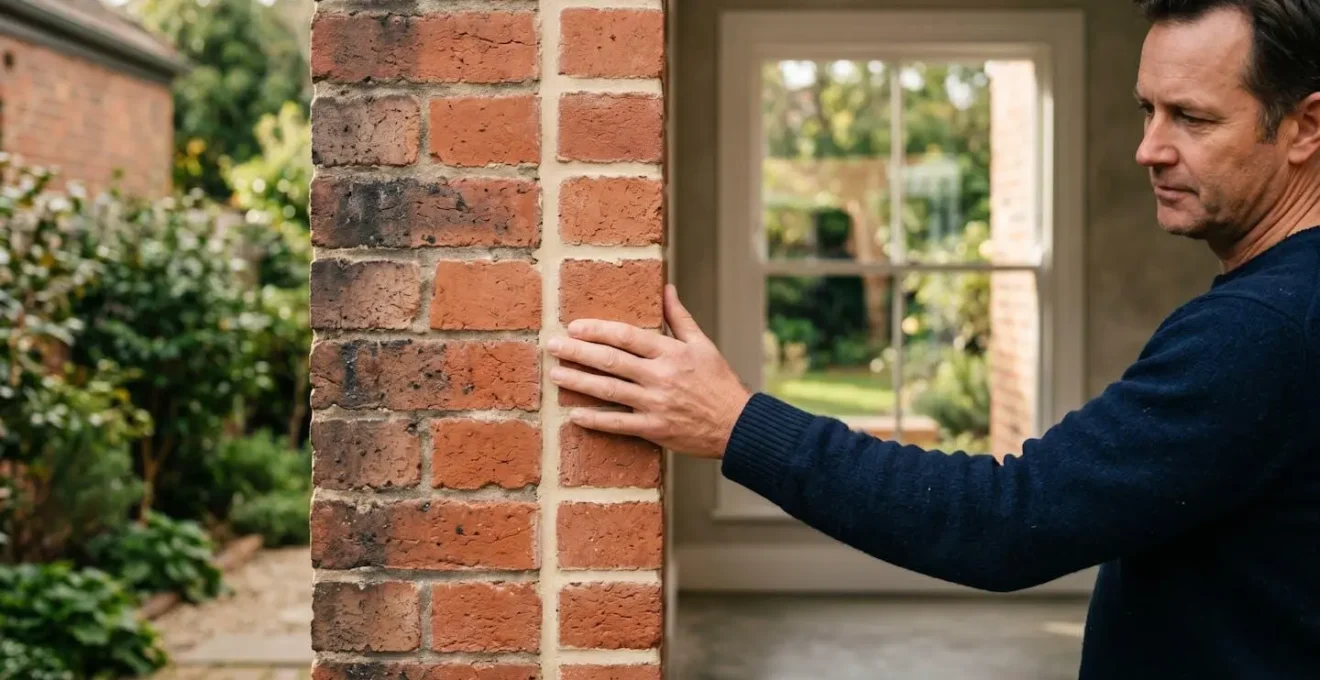
This commitment to quality design is what separates a high-value conversion from a cheap-looking alteration. Finally, some new housing estates have conditions attached to the original planning permission that restrict the conversion of garages. It is vital to check your property deeds for any such restrictive covenants.
Lawful Development Certificate: Why You Should Get One Even If You Don’t Need Planning?
This is perhaps the single most important piece of advice I can give any homeowner undertaking a project under Permitted Development: always apply for a Lawful Development Certificate (LDC). While not mandatory, an LDC is an official document from your local council confirming that your proposed or existing development is lawful and does not require planning permission. Think of it as insurance for your project.
Without an LDC, you operate on your own interpretation of the rules. If a neighbour complains or the council later decides your project did not, in fact, meet the PD criteria, you could face enforcement action and be ordered to demolish the structure. An LDC removes all ambiguity and provides legal certainty that your build is compliant. This is invaluable when it comes to selling your property. A buyer’s solicitor will demand proof that any extension is lawful, and an LDC is the definitive evidence they need. Without it, you can face delays, a reduction in the sale price, or even have to purchase expensive indemnity insurance.
The cost and effort involved in obtaining one are minimal compared to the risk of not having it. As leading architects point out, the financial case is clear:
The cost of a Lawful Development Certificate application ranges from approximately £100-240 depending on your local council, significantly lower than a full householder planning application which costs £258 from April 2025.
– Marraum Architects, The 6-Metre and 8-Metre Extension Rules (UK Guide)
Submitting an LDC application forces you to prepare proper drawings and demonstrate full compliance, which is a valuable design check in itself. It is the cornerstone of de-risking your project and protecting your home’s value.
Green Belt vs Brownfield: Where Will the Council Actually Let You Build?
Permitted Development rights are a national grant of planning permission, but they are not a universal guarantee. Local authorities have the power to remove these rights, and they often do in sensitive areas. The first thing I tell clients before they even think about designs is to check for these restrictions. The most common tool for this is an Article 4 Direction.
An Article 4 Direction is made by a council to remove specific classes of Permitted Development in a defined area. They are most commonly used in conservation areas to protect the architectural character and heritage of a neighbourhood, but can be applied anywhere. An Article 4 Direction doesn’t necessarily mean you can’t build; it just means you will have to submit a full planning application for work that would normally be covered by PD. Your chances of approval will depend on how well your design respects the local character.
To check if your property is affected, visit your Local Planning Authority’s website and look for their « interactive planning map » or « planning constraints » section. By entering your postcode, you can see if any Article 4s or other designations apply. Beyond Article 4, PD rights are also more restricted in other designated lands, including:
- National Parks
- Areas of Outstanding Natural Beauty (AONBs)
- The Broads
- World Heritage Sites
In these areas, you cannot build extensions to the side of the house or any outbuildings at all under PD. This initial check is a fundamental part of assessing your property’s true development potential and is the first step in any feasibility study.
Heat Pumps vs Gas Boilers: Is It Time to Switch Your Heating System?
A common and critical oversight is assuming that because a project falls under Permitted Development, it is exempt from other regulations. This is incorrect. Any extension, loft conversion, or new outbuilding must fully comply with the Building Regulations of England and Wales. These regulations are entirely separate from planning and cover everything from structural stability and fire safety to ventilation and, most importantly, energy efficiency.
Part L of the Building Regulations, which covers the conservation of fuel and power, is particularly stringent for new extensions. It mandates high levels of insulation in the walls, floor, and roof, as well as high-performance glazing. The goal is to ensure that new structures are highly energy-efficient from the outset. This is known as the « fabric-first » approach.
New extensions built under PD must still meet stringent Building Regulations for energy efficiency (Part L), and the ‘fabric first’ approach—focusing on insulation, glazing, and airtightness—is more critical than the heat source itself for overall performance.
– UK Government, Permitted development rights for householders: technical guidance
Case Study: Achieving Part L Compliance in a PD Extension
A 2024 project involving a 6-metre rear extension in London demonstrated the rigour of this approach. To comply, the architect specified U-values (a measure of heat loss) of 0.18 W/m²K for the walls and 0.15 W/m²K for the roof, achieved with 150mm of high-performance PIR insulation. The use of triple-glazed windows and meticulous attention to airtightness at junctions reduced the new extension’s heating demand by an estimated 65% compared to simply extending the old central heating system. This fabric-first success meant the homeowner could use a smaller, more efficient heating system, whether it was a modern gas boiler or a low-carbon heat pump.
This is where the debate between heat pumps and gas boilers becomes relevant. By building a highly insulated extension, you dramatically reduce its heating load. This makes integrating an efficient system like an air-source heat pump more viable and cost-effective, future-proofing your home and improving its Energy Performance Certificate (EPC) rating, which adds tangible value.
Key Takeaways
- Permitted Development is a strategic tool, not just a list of rules. Success depends on understanding the nuances, not just the dimensions.
- A Lawful Development Certificate (LDC) is your single most important tool for de-risking a project and ensuring its value upon resale.
- Building Regulations are separate from and just as important as planning. A « fabric-first » approach to energy efficiency is mandatory for all new extensions.
How to Assess Raw Land Potential for Profitable Development?
We’ve navigated the specific opportunities and the critical pitfalls of Permitted Development. The consistent theme is that success is born from strategy, not guesswork. Viewing your property as an asset with untapped development potential requires a shift in mindset—from simply wanting more space to actively planning how to create high-quality, compliant, and valuable additions to your home.
Whether it’s choosing a dormer over a Velux for better headroom, calculating the financial trade-off of a garage conversion, or investing a small amount in an LDC to secure a much larger investment, every decision has consequences. The smart homeowner, guided by professional principles, can add tens of thousands of pounds to their property’s value. The uninformed can face legal action, financial loss, and a poorly executed build that detracts from their home.
The good news is that you can perform your own initial due diligence without spending a fortune. Before you even approach an architect, a quick digital feasibility study can give you a powerful snapshot of what’s possible. The following plan outlines how to do this in under 30 minutes using free online tools.
Your 30-Minute Digital Feasibility Action Plan
- Map Your Canvas: Use Google Maps (satellite and 3D views) to get a clear overhead view. Measure your garden depth and identify your home’s original footprint versus any later additions to establish your baseline for extension rules.
- Check for Constraints: Go to your Local Planning Authority’s website and find their online planning portal. Search your address for any past applications, but most importantly, look for any active « Article 4 Directions » that may remove your PD rights.
- Assess Local Value: Use property portals like Rightmove or Zoopla and their « sold prices » feature. Compare properties similar to yours with and without the type of extension you’re considering to get a rough idea of the potential value add.
- Confirm the Rules: Visit the official UK Planning Portal. Use their interactive guides to double-check the specific PD classes (e.g., Class A for extensions) that apply to your property type (detached, semi-detached, in a conservation area, etc.).
- Run a Preliminary Calculation: Estimate your potential equity gain. Calculate the added square metres your project would create and multiply by a local value per square metre. Subtract the estimated build cost (£1,500-£2,500/sqm as a rough guide) to see the potential financial upside.
This initial feasibility check will arm you with the critical information needed to have a productive conversation with an architect. By investing a small amount of time upfront, you can approach your home extension project with the confidence and strategic clarity required to truly maximize its potential and add lasting value to your home.